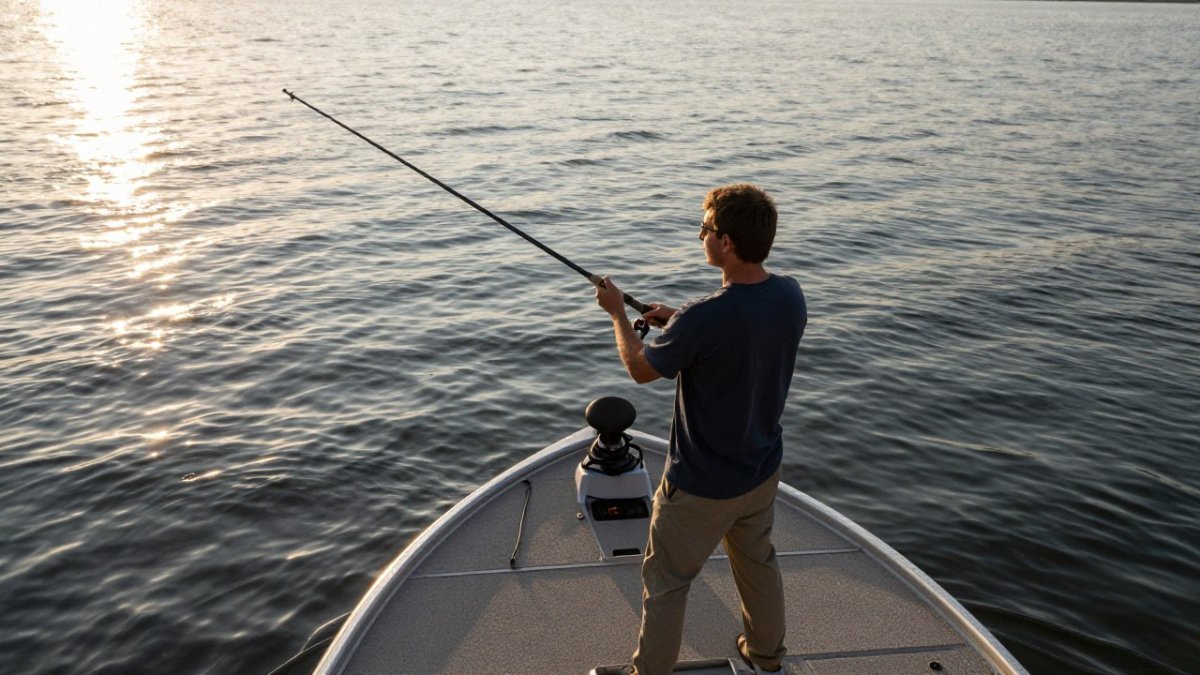
Best Crappie Rod Length for Boat Fishing
Last Updated: November 19, 2026
Quick Summary
The best crappie rod length for boat fishing depends on your technique: 10 to 12 feet for jigging, 7 to 8 feet for casting and dock shooting, and 12 to 16 feet for dipping, trolling, and spider rigging. Deck space sets the ceiling, so measure your boat before buying.
- Vertical jigging calls for a 10 to 12-foot light-power, fast-action rod for deep brush and standing timber.
- Dock shooting and casting work best with a 7 to 8-foot ultralight rod for tight cover and accuracy.
- On a 12 to 14-foot aluminum boat, keep the long rod at the bow and a 7 to 8-foot casting rod at the stern.
- Measure from your seat to the bow and subtract two feet for safety and casting room to find your ceiling.
- Beginners should start with one 10 to 12-foot light-power rod and one 7-foot casting rod.
Table of Contents
- How Boat Fishing Changes Your Crappie Rod Length Decision
- Rod Length by Boat Technique: Jigging, Trolling, and Dipping
- Best Crappie Rods for Jigging from a Boat
- Crappie Rod Length and Action for Open Water
- Long Crappie Rod for Dipping and Flipping Around Cover
- Matching Rod Length to Boat Size and Layout
- Managing Multiple Rods and Fishing Partners in Tight Space
- A Step-by-Step Way to Pick Your Boat Crappie Rod
- Frequently Asked Questions
How Boat Fishing Changes Your Crappie Rod Length Decision
Crappie rod length for boat fishing generally depends on the technique: jigging and dipping are commonly fished with rods around 10 to 12 feet, casting and dock shooting with shorter rods around 7 to 8 feet, and trolling and spider rigging with longer rods around 12 to 16 feet. Deck space, not bank-fishing habit, decides the number. The boat sets the ceiling on length, and the technique sets the floor.
Space, reach, and control pull against each other on every deck. A longer rod reaches farther over open water and holds a jig steadier in a vertical presentation. It also swings wider, catches more wind, and turns a two-angler boat into a puzzle. A short rod casts with accuracy and stores easily, but it gives up reach around brush and dock pilings.
That trade-off is the whole decision. Start with your boat instead.
Rod Length by Boat Technique: Jigging, Trolling, and Dipping
Each boat technique has a length range that works, and staying inside it matters more than brand loyalty or blank material.
| Technique | Rod Length | Power and Action | Best For |
|---|---|---|---|
| Vertical jigging | 10-12 ft | Light power, fast action | Deep brush, standing timber |
| Dock shooting and casting | 7-8 ft | Ultralight, fast action | Docks, tight cover, accuracy |
| Dipping and flipping | 12-16 ft | Light power, fast action | Shallow cover, stake beds |
| Trolling and spider rigging | 12-16 ft | Light power, moderate-fast action | Open water, multiple lines |
| Long-pole jigging | 15-18 ft | Light power, fast action | Vertical presentation over cover |
Rod Length
Jigging rewards a rod long enough to hold a 1/16-ounce jig still while you watch the line. Trolling and spider rigging need length to spread lines and clear the motor. Dipping wants reach without a rod so heavy it wears you out by noon.
For tight boat situations, a 7-foot option like the Hurricane Dock Shooter/Casting 7Ft fits where longer rods cannot swing. That is the honest case for short rods on a crowded deck.
Best Crappie Rods for Jigging from a Boat
Jigging from a boat is a control problem, not a distance problem. You are lowering a small jig straight down and reading the line for a soft tick.
A 10 to 12-foot light-power rod with a fast action does three things well: it keeps a 1/32-ounce jig from swimming in wind, it telegraphs a crappie’s light take, and it sets the hook with a short sweep instead of a full swing. That last point matters on a boat, where a big hookset sends the rod tip into your partner’s ear.
Pair the rod with a smooth spinning reel that has a reliable drag. Our Hurricane KF150 Spinning Reel with Collapsible Handle folds down for storage and travel, which helps when six rods share a rod locker.
Watch out: too stiff a power turns a light jig bite into a missed fish, because the rod does not load and the hook never drives home.
Crappie Rod Length and Action for Open Water
Open water changes the math. With no brush to snag and no bank to cast toward, length becomes a tool for covering water and managing line.
A 12 to 14-foot light-power rod with a moderate-fast action is the practical middle. It casts a slip float rig with enough distance to work a flat, and it absorbs the surge of a bigger fish at the boat.
Action matters more than length here. Fast action gives a crisp hookset at distance; moderate action protects light line and keeps treble-hooked lures pinned. Match the rod to your lure weight and the reel to your line, and open water becomes the easiest place on the lake to fish.
Long Crappie Rod for Dipping and Flipping Around Cover
Dipping and flipping are where a long crappie rod earns its keep. You are not casting; you are lowering a jig into a hole in the cover and lifting it back out.
A 12 to 16-foot rod gives the reach to drop a jig beside a stump without moving the boat, and that silence is the point. Push the boat too close and the fish spook. Our 12′ WARPIG SERIES™ covers the middle of that range, and the 7.5’ WARPIG SERIES™ gives you a shorter option for tighter work around docks and laydowns.
For the longest reach, the Assassin Scoping 18 Ft Rod collapses for storage and extends for dipping over stake beds and shallow cover. An 18-foot rod is not for everyone, but around heavy cover it lets you fish water other anglers drift past.
Matching Rod Length to Boat Size and Layout
Boat size sets a hard ceiling on usable rod length, but layout, not just length overall, decides what you can actually swing. Two boats of the same length can have very different usable deck space depending on console placement, seat height, and whether the bow is open or cluttered with equipment. Use the ranges below as a starting point, then adjust for your specific layout.
- Canoe or kayak: 7 to 10 feet. You are seated low with limited swing room, and a long rod loads awkwardly from a seated position. A 7 to 8-foot casting rod for dock shooting and a 9 to 10-foot dipping rod is the practical ceiling. Anything longer turns every hookset into a balance test.
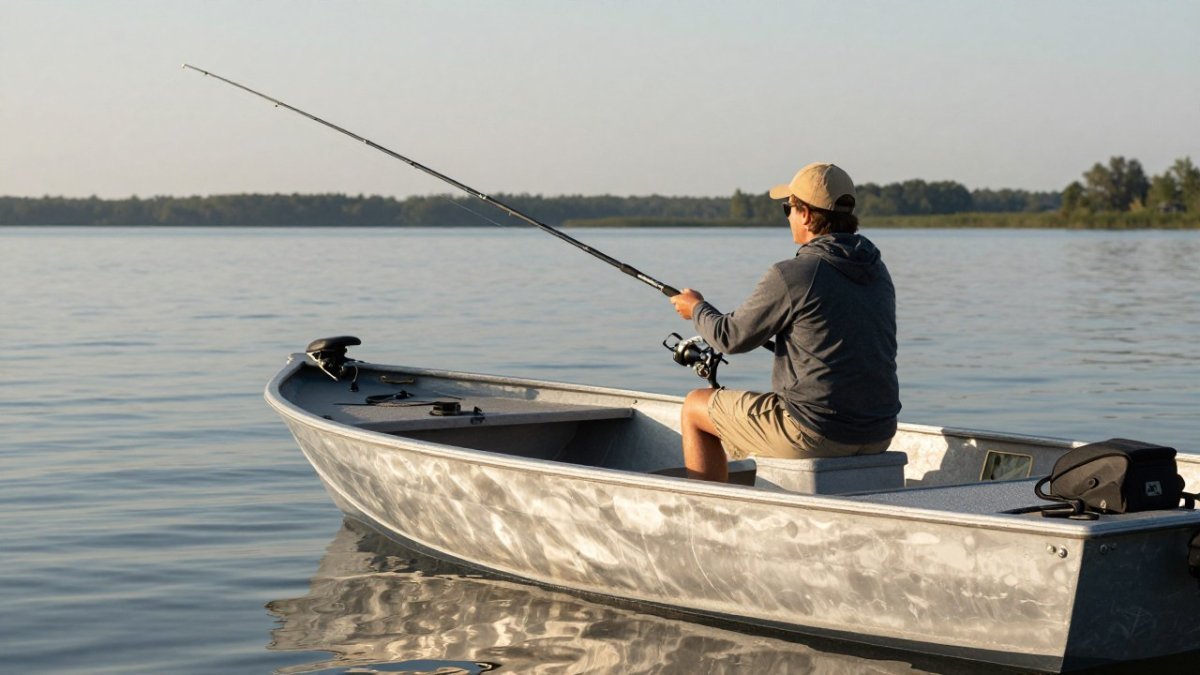
- 12 to 14-foot aluminum boat: 10 to 12 feet. This is the most common crappie rig, and the open bench layout usually allows a 10 to 12-foot jigging rod fished from the front seat. If you fish two anglers, keep the long rod at the bow and a 7 to 8-foot casting rod at the stern so swings never cross.
- 16 to 18-foot crappie boat: 12 to 16 feet. Side-console or center-console layouts with forward fishing decks have the room for spider rigging and multiple rod holders. Measure from the front pedestal seat to the bow tip; that distance minus two feet is your safe long-rod ceiling.
- Pontoon or deck boat: 14 to 16 feet. Wide decks handle long poles and fishing partners, but the furniture layout matters. Measure the clear path from your seat to the rail before assuming a 16-foot pole will work; gate openings and furniture often cut usable length by two to three feet.
Measure your deck before you buy. Lay a tape from your seat to the bow and subtract two feet for safety and casting room. That number is your ceiling. On boats with a raised front deck, measure from the deck surface, not the cockpit floor, because the height change alters your swing arc.
Watch out: rod holders mounted upright along the gunwale can reduce usable length more than the hull does. A 16-foot rod in a vertical holder catches wind and limits where you can stand; horizontal holders along the rail preserve both length and deck space.
Managing Multiple Rods and Fishing Partners in Tight Space
A crowded boat is a rod-management problem before it is a fishing problem. Two anglers with long poles in a small boat can easily tangle lines, and assigning length and position by role helps.
Set a simple rule: one long rod per angler, plus short rods for casting.
Store long poles in horizontal holders along the gunwale where practical, since upright storage can catch wind. Keep hooks covered on rods you are not using, a treble hook buried in a rod sock is a five-minute delay every time.
Assign one angler the bow and one the stern so your swings never cross. In a side-console boat, the console itself is a natural divider: the angler fishing forward of the console owns the bow arc, and the angler behind it owns the stern.
A common mistake is buying four long rods before checking whether the boat and your partner can actually fish them. Start with two, learn the deck, then add. If you regularly fish three or more anglers, cap long rods at two and fill the rest of the quiver with 7 to 8-foot casting rods, they store easier, cast more accurately around docks, and keep the deck navigable.
Confirm your rod locker length before buying a long one-piece pole.
A Step-by-Step Way to Pick Your Boat Crappie Rod
Use this process and you will land on the right length without guessing.
- Measure usable deck length from your seat to the bow.
- List the techniques you actually fish: jigging, dipping, casting, trolling.
- Pick the length range that covers most of that list from the table above.
- Match power to lure weight: light for 1/32 and 1/16-ounce jigs, medium-light for heavier.
- Choose fast action for jigging and dipping, moderate-fast for trolling and open water.
- Confirm the rod breaks down or fits your storage.
- Test the swing on the water before buying a second rod.
Beginners should start with one 10 to 12-foot light-power rod and one 7-foot casting rod. That pair covers nearly every boat situation on a crappie lake.
Picking the right crappie rod length for boat fishing comes down to matching your deck, your techniques, and your lure weight instead of copying someone else’s setup. HH Rods and Reels builds guide-tested crappie rods for flipping, dipping, pulling, shooting, and pushing, backed by a limited one-year warranty against defects in materials and workmanship. Every rod is designed to perform in real boat conditions at a price that does not shut out everyday anglers, and a share of profits supports veterans’ organizations and youth fishing. Get started with HH Rods and Reels and put the right length on your deck this season.
Frequently Asked Questions
What length crappie rod is easiest to use from a boat?
A 10- to 12-foot rod handles most boat situations well. It gives you enough reach to work cover and vertical presentations without swinging wide enough to tangle with a partner’s line. Shorter 6- to 8-foot rods are easier to cast and store, while 13- to 15-foot poles suit spider rigging and long-line trolling where reach matters more than casting. Match the length to your primary technique and the deck space you actually have.
Is a longer rod better for crappie jigging?
Longer rods help when you need reach, like dropping a 1/32-ounce jig into brush or holding a vertical presentation over deep structure. A 10- to 12-foot rod with a fast action gives you a sensitive tip to feel light bites and enough backbone to set the hook. From an open boat with no cover, a shorter 7- to 9-foot rod casts more accurately and is easier to control in wind.
Should I use a different rod length for open-water crappie fishing?
Yes. Open water calls for casting accuracy and lure control, so a 7- to 9-foot rod with a light power and fast action works well. Crappie rod length and action for open water should let you cast a 1/16-ounce jig into a breeze without overloading the blank. Save the long 13- to 15-foot poles for trolling and spider rigging where the extra reach keeps lines separated.
What crappie rod length works best for dipping or flipping?
A long crappie rod for dipping and flipping usually runs 10 to 13 feet. The extra length lets you drop a jig straight down into stake beds, brush piles, and dock shadows without moving the boat close enough to spook fish. Look for a stiff butt and a sensitive tip so you can feel the jig tick structure and set the hook cleanly in tight cover.
